The world’s most celebrated recording studios are often perceived as hallowed ground, spaces where sonic magic is captured and immortalized. While top-tier microphones, consoles, and outboard gear frequently steal the spotlight, the true unsung hero of any great recording is the room itself. The acoustic environment is the first and most critical instrument in the signal chain, shaping the sound long before it ever reaches a microphone diaphragm. For decades, the world’s premier facilities have guarded their acoustic design philosophies with near-religious fervor, treating them as proprietary secrets. Yet, through years of study, reverse-engineering, and whispered anecdotes from seasoned engineers, a fascinating picture of these acoustic secrets has begun to emerge.
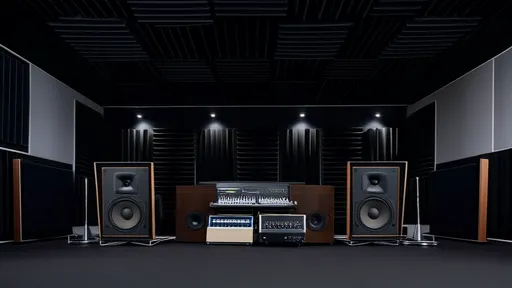
At the heart of any world-class control room or live room is the fundamental principle of acoustic neutrality. The goal is not to create a room that sounds "good" in a subjective sense, but one that is transparent. A mixing environment must be a ruthlessly honest window into the audio, allowing the engineer to make decisions that will translate accurately to the myriad of playback systems in the real world, from car stereos to club PA systems and consumer earbuds. This is achieved through a meticulous, multi-layered approach to acoustic treatment, focusing on the management of three core issues: standing waves, early reflections, and reverberation time.
The battle against problematic standing waves, or room modes, begins with the very dimensions of the room. Legendary studios often employ room ratios based on mathematical formulas, such as the Bonello curve or the classic "golden ratios," to distribute these resonant frequencies as evenly as possible and avoid massive buildups or nulls at certain notes. This is the first and most crucial secret: you cannot fix a bad room shape with acoustic treatment alone. The foundation must be solid. Once the dimensions are set, massive, custom-built bass traps are integrated into the very architecture. These are not mere foam panels purchased from a catalog; they are often Helmholtz resonators or diaphragmatic absorbers tuned to specific problematic low-frequency bands, built directly into walls, ceilings, and corners, sometimes disguised as architectural features.
Managing the early reflection points is the next critical phase. In a control room, the first sound to reach the mix engineer’s ears should be the direct signal from the studio monitors. Any sound reflecting off a nearby surface, like the console, side walls, or ceiling, arrives milliseconds later, smearing the stereo image and masking critical detail. The secret here is precise and strategic absorption and diffusion. Acoustic panels are placed at these first-reflection points with laser-guided accuracy. However, simply deadening the entire room would create an unnaturally sterile and fatiguing environment. This is where diffusion becomes an art form. Studios use an array of complex, mathematical diffusers—like those based on quadratic residue number sequences—to scatter reflected energy, breaking it up into countless tiny, low-level reflections rather than simply absorbing it. This preserves a sense of "liveness" and spatial information without the damaging comb-filtering effects of discrete, strong reflections.
For the live room, where instruments are recorded, the philosophy often shifts from neutrality towards character. Here, the acoustic secret is controlled variety
Another profound secret lies in the construction itself. Many iconic studios are famous for their "room within a room" floating isolation construction. The entire inner shell of the studio—floor, walls, and ceiling—is mechanically isolated from the outer building structure. This is achieved by building upon massive springs, neoprene pads, or even stacked rubber hockey pucks. This hermetically seals the studio from external vibrations: subway rumble, traffic noise, and even the HVAC system. Inside, every detail is considered. HVAC ducts are labyrinthine and lined with acoustic lining to silence airflow. Electrical conduits are run with flexible couplings to prevent structure-borne noise. The door is perhaps the most telling feature; it will be a heavy, vault-like door with magnetic seals, often costing as much as a luxury car, because a single weak point can ruin the entire isolation system. Beyond the physics, there is an intangible, almost spiritual element to these spaces. It’s the secret of vibe. Acoustic designers and studio owners understand that comfort and inspiration are just as important as technical perfection. The lighting is often warm and indirect, avoiding the harsh glare of fluorescent tubes. The décor is carefully curated to feel both professional and inviting. This psychological component is not an afterthought; it is deliberately engineered. A relaxed and inspired musician performs better, and that performance is ultimately what is being captured. The room is designed to disappear for the artist, allowing them to focus solely on their craft, while working tirelessly for the engineer to capture it with flawless clarity. Finally, one of the best-kept secrets is that there is no single "perfect" acoustic recipe. Abbey Road’s Studio Two sounds nothing like Capitol Studios’ famed echo chambers, and both are utterly iconic. The secret is a holistic, deeply intentional approach where every element, from the angle of a wall to the fabric on the panels, is part of a cohesive system designed for a specific purpose. It is a symphony of physics, materials science, and psychology. While modern technology allows home producers to access tools like convolution reverb to emulate these spaces, the true magic—the interaction of a great performance with a meticulously tuned acoustic environment—remains the ultimate secret that the world’s great studios continue to master and protect.

By /Aug 22, 2025

By /Aug 22, 2025

By /Aug 22, 2025

By /Aug 22, 2025

By /Aug 22, 2025

By /Aug 22, 2025

By /Aug 22, 2025

By /Aug 22, 2025

By /Aug 22, 2025

By /Aug 22, 2025
By /Aug 22, 2025

By /Aug 22, 2025

By /Aug 22, 2025
By /Aug 22, 2025

By /Aug 22, 2025

By /Aug 22, 2025
By /Aug 22, 2025

By /Aug 22, 2025

By /Aug 22, 2025
By /Aug 22, 2025