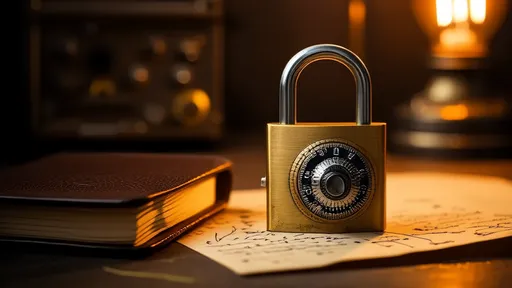
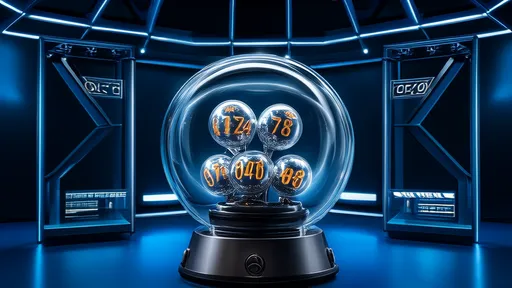
In the quiet hum of modern security, the combination lock stands as a testament to a timeless dance between memory and mechanics. These unassuming devices, often tucked away on briefcases, lockers, and diaries, guard our secrets not with keys, but with sequences—a numerical poetry known only to their keepers. The Password Lock: Exclusive Memory of Digital Combinations isn't just a theme; it's an exploration of how these simple strings of digits become intimate extensions of our minds, weaving personal narratives into the very fabric of security.
From its inception, the combination lock has been a marvel of ingenuity. Unlike traditional locks that rely on physical keys—easily lost, duplicated, or stolen—the combination lock demands cognitive engagement. It asks the user to hold a secret, to carry a code within the recesses of memory. This shift from physical to mental keyholding transformed security from a matter of possession to one of knowledge. Early models, like those developed in the 19th century, used intricate wheel packs and dials, requiring precise alignment of numbers to release the bolt. Each turn of the dial was a step in a ritual, a practiced motion that embedded the combination into muscle memory as much as cerebral recall.
What makes these locks fascinating is their psychological dimension. A combination isn't merely a random set of numbers; it often carries meaning. People choose dates of significance—anniversaries, birthdays, historical events—or patterns that feel intuitive, like descending sequences or palindromes. This personalization turns the lock into a storyteller. Every time the correct combination is entered, it's not just a mechanism unlocking; it's a memory being affirmed. The numbers 7-10-21 might represent a wedding day, while 3-14-15 echoes the mathematical constant pi, beloved by a science enthusiast. The lock becomes a silent confidant, holding not just valuables, but fragments of identity.
Yet, this reliance on memory is a double-edged sword. Forgetting a combination can feel like a small betrayal of self—a mental lapse that locks one out of their own possessions. The frustration is unique; it's not like losing a key where the solution is to find or replace it. Here, the solution lies within, trapped behind a mental block. This vulnerability has inspired countless methods to jog memory, from mnemonic devices to writing hints in disguised places. Some even develop rituals, like reciting the numbers aloud or associating them with a familiar tune, to keep the combination vivid. The lock, in this light, becomes a teacher of mindfulness, reminding us of the fragility and power of human recall.
Technological advancements have expanded the concept of combination locks beyond the mechanical dial. Electronic keypads, biometric scanners, and smartphone-integrated systems now offer digital versions of the same principle. These modern iterations often allow for longer, more complex codes, and even the ability to change combinations with ease. However, the core relationship remains unchanged: the user must remember something. Whether it's a PIN, a password, or a pattern, the challenge of exclusive memory persists. In fact, digital locks have intensified this relationship, as they frequently guard more critical assets—bank accounts, personal devices, and online identities. The stakes are higher, and the burden on memory is greater, yet the human tendency to imbue codes with personal meaning endures.
In popular culture, combination locks have taken on symbolic weight. They appear in films and literature as metaphors for secrecy, trust, and the barriers between people. Unlocking a combination lock can symbolize solving a mystery or gaining access to hidden truths. Conversely, being unable to open one can represent isolation or misunderstanding. This cultural resonance underscores how deeply these devices are woven into our collective consciousness. They are not just tools; they are narrative devices that reflect our anxieties and aspirations around security and connection.
Despite the rise of more advanced security technologies, the combination lock retains a loyal following. Its appeal lies in its simplicity and reliability. There are no batteries to die, no circuits to fail—just gears and numbers working in harmony. For many, the tactile feedback of turning a dial or pressing buttons provides a sense of control and certainty that digital interfaces often lack. This tangibility connects us to a longer history of mechanical craftsmanship, where precision and durability were paramount. In a world increasingly dominated by virtual experiences, the physicality of a combination lock offers a grounding, almost nostalgic, satisfaction.
Looking ahead, the future of combination locks may involve a fusion of old and new. Smart locks with traditional keypads allow users to enter codes while also offering remote access via apps. Biometric features can supplement memory with fingerprints or facial recognition, providing multiple layers of security. Yet, even as these innovations emerge, the essence of the combination lock—its demand for exclusive memory—remains relevant. It serves as a reminder that, in an age of external storage and cloud-based solutions, some secrets are still best kept in the mind.
In conclusion, the password lock, with its digital combinations, is more than a security device; it is a vessel for human experience. It challenges us to remember, to personalize, and to engage with our possessions on a deeper level. Whether through a classic dial or a modern keypad, it embodies a unique intersection of mechanics and memory, standing as a silent guardian of both our valuables and our stories. As we continue to evolve alongside technology, this enduring relationship underscores a fundamental truth: that the most secure lock is often the one whose code lives exclusively within us.

By /Aug 27, 2025
By /Aug 27, 2025
By /Aug 27, 2025

By /Aug 27, 2025

By /Aug 27, 2025
By /Aug 27, 2025

By /Aug 27, 2025
By /Aug 27, 2025
By /Aug 27, 2025
By /Aug 27, 2025

By /Aug 27, 2025

By /Aug 27, 2025

By /Aug 27, 2025
By /Aug 27, 2025

By /Aug 27, 2025
By /Aug 27, 2025
By /Aug 27, 2025
By /Aug 27, 2025

By /Aug 27, 2025
By /Aug 27, 2025
